A Lioness in Waiting

Before I became a parent, I was aware of the fierceness that motherhood brings. I’d heard my friends speak of it, and as a teacher I’d certainly seen many a lioness in action.

I understood the mother’s urge to protect her young as a primal instinct. But of course an understanding always deepens with experience.

I’m now fairly certain that the roar of a mother in labour is in fact the birth of her inner lioness, giving her a strength she didn’t know she had (unfortunately some of our inner lionesses *ahem, mine* aren’t as strong as others and we beg for allllll the drugs and whatever else will stop the pain – but still, I did roar).

And there she sits from that moment on, buried inside us but always ready. Most of the time we hardly notice her, though that girl can leap fast when needed, giving us that hot-stomach feeling, putting our hairs on end. It can take a good bit of self-talk to calm her down. Sometimes we don’t even try, our lioness is on high alert and ready to pounce. We might need other people to calm her down, to tell her it will be okay, to talk through some steps so that she doesn’t have to feel so anxious all of the time.

Still, I expected the lioness.

What I didn’t expect was how much my lioness might take me out of my comfort zone. That she might make me become a braver person. Because while being a lioness doesn’t make you more aggressive, it does make you more assertive. You become an advocate, THE advocate for your child. And that can take courage, particularly if your child doesn’t seem to fit the mould of other children (Please note: I’m not referring specifically to my children, just working through the idea. Of course, mine are their own brand of wonderful weirdling).

And just as it takes courage to advocate for our children, it can also take courage to accept them for the people they are. To not try changing them into the people we thought they might be, or the people we think they’d be happier as. To let them unfold as the unique little individuals they are, to embrace all of their quirks and foibles as they grow and change.

At a personal level, I live in a small country town. It is as beloved to me as it is stifling to others. But though I love it dearly for many reasons, I am acutely aware since having my sons, that it is still a very monocultural, sport-focused town. And I’d be lying if I didn’t say that I feel the weight of that when it comes to how we raise our boys.

I know life will probably go easier for them if they are good at sport. I know the lifelong friendships and sense of community, along with the health benefits, that can be found at such establishments and of course I want that for my kids.

But at the same time, I don’t want them to think they have to be stars. Or that they have to play a sport they don’t like just because that’s what everyone else does. Or that if they’re no good at sport then that somehow makes them any less.

I want them to know that physical strengths do not outweigh character strengths. I want them to feel loved and valued unconditionally, whether they take up Irish Dancing or play Aussie Rules or start a chess club. Whether they’re quiet and sensitive, or loud and bold.

So as their advocate I need to have courage too. Because while they may follow every normal, mainstream path that has ever been trodden, they also may not. And when you walk your own path you’re bound to come across tricky stuff.

I guess that’s what our lioness is for. She just sits there, ready.

Eliza xx

26996282_10156323944977922_150504908_n


Hot days at home with little kids!

I do enjoy a good change in season, and can see the upsides of both hot and cold weather, but gee I like those days that fit snugly between 20 to 29 degrees. So much scope for energy burning outdoor activities– crucial to two busy little boys and their mother’s sanity.

Of course, the inland Australian summer laughs at such mild temperatures. It’ll dangle the carrot of a sub-30 degree day before scorching our backsides with a hellish stretch of 40 pluses, and throw in an overnight low of 25 just to make sure you get the message. Australian Summer: she hot!

On those days when it feels like a trip to the mailbox results in scorched eyebrows and 17 new moles, it can be hard to keep the kids entertained enough to stop your stress lines from reproducing at a rate of rabbits.

I find those days HARD. Children were not designed to be stuck inside all day. Parents were not designed to be stuck inside with children all day. Yuckity-yuck.

So I figure if I find it hard, other parents must find it hard too. In the hope that it might offer ideas for other parents, and with the definite hope that you’ll offer more suggestions to me, I thought I’d share our basic routine for the days that are hotter than Jobe Watson (it can’t be just me?)

Righto, so here’s how our basic day runs when we have nothing on and nowhere to be:

6am: Kids wake any time from 6am (ergh, I know), Bobby (3.75yo) will usually put the telly on in the lounge while Sid (2yo) comes and snuggles with us. For the record, Sid will not watch any telly – none!! we’re not sure what’s wrong with him? – but seriously, we do enjoy those morning cuddles. Thankfully I am a morning person, so I get up after a little bit and grab a coffee, which Sid then proceeds to bump and spill all through the bed. Relaxing!

6.30/7am: Breakfast.  Fairly self-explanatory. Kids choose from a wide range of porridge, rice bubbles or weet-bix. If I’m feeling really generous they get some fruit too. Wild!

7.30am: Free play. I pack up and get on with the day while the kids play. Bobby plays really well by himself during this time, but it is often Sid’s worst time for whinging, I do not know why. He will follow me around crying, which is like a hot poker stick to the ear drums so I try giving him little jobs to do – sometimes it works, sometimes (like this morning) it does not! So the dishes wait and I carry the little koala around doing what I can.

8.30/9am: We get out! Before the sun really has a chance to fry eggs on our forehead we head out somewhere. This is usually something like:

Bike ride/walk around the neighbourhood

Visit a park

Footy oval/netball courts

River walk – although who am I kidding, since I heard there was a snake sighting there about 3 months ago I haven’t been back – plenty of time in winter ha ha!)

Visit the cemetery – this might sound weird but my kids love the cemetery. We have lots of relatives buried in our local cemetery and I’ve explained to the boys that it is a place for remembering people we love who aren’t alive anymore. We say hello to our loved ones and then the kids run amongst the older gravestones. I don’t know if this is the wrong thing to do, but I think about it from my grandmother’s perspective and I know that if she could, she would love to hear the joyful sounds of children around her. We probably visit the cemetery about once a month.

Go to a swimming pool – mum has a pool so we often go swimming

Skatepark – my kids are not gnarly skateboarders but they love climbing the concrete jungle of a skatepark. This was a hot favourite for months.

10ish: Snacktime. Honestly, my kids would eat every five minutes if they could so we don’t always last till 10am but let’s use that as a rough rule. This is usually some combination of yoghurt/fruit/biscuits/muesli bar – the usual suspects.

10.30am: Free play, often in the backyard. This is generally the time I hang out washing and water pots so the kids will play in the backyard.

Some things they play with regularly:

Trampoline

Guinea pigs – they got them for Christmas and they love them, Bobby will just pull up a chair and watch them

Sandpit play

Sporting equipment – for short bursts, neither of them are passionate sportsmen at this stage!

Chalk

Obstacle courses

Cars/trucks – Sid’s interest more than Bobby’s

Bikes

Water play

Bug catching

11.15am: Lunch. Early, I know! But my kids wake around 6am so by 11am they are getting hangry. Bobby has a huge appetite so will put away two rounds of sandwiches easily, though my new rule is that he must eat the crusts of his first sandwich to get another one and that has slowed him down! Wicked.

11.30am: Free play. The boys always play so much better after they have eaten and generally gravitate to the play room while I pack up from lunch. If they’re playing happily I often take the newspaper or a book in to read while they get lost in their own world. It’s possibly wrong to say, but I don’t enjoy playing imaginative games with them – they can get to worlds that my imagination left a long time ago. What I LOVE to do though, is to watch and listen to them play – I could do that all day. It is something they do much better if I’m busy doing my own thing, like reading or writing. If they’re struggling to play well, this is the time I’ll read books with them or make up some game to play with them.

12.15am Sid naps, Bobby watches telly. Sid is a terrific day sleeper and will usually do about 2.5 hours (I think it’s because he’s only allowed to have his dummies at nap times and he is obsessed with them so happily goes to bed). Bobby was a horrible day sleeper so if you’ve got a cap napper then you have my sympathies!! While Sid sleeps, Bobby gets to watch telly. This has been our routine for a long time so Bobby knows that once Sid goes down he can put on a movie or watch a show for a while. This is my rest time. I listen to podcasts, check social media, read a book, do jobs, or just chill out. This time is very, very precious to me!

1.15pm: Bobby usually gets over of the tv after about an hour so the telly goes off and we do something together. Often he helps me with a job, or we do puzzles or card games that we can’t do as easily when Sid is around. Sometimes he’s happy to play by himself, we just go with the flow.

2.30ish: Afternoon tea time. Our current hot weather snack is a smoothie. Aldi has terrific frozen fruit like mango and mixed berries to wack in with milk or yoghurt. There’s nothing fancier than that going on here.

3ish: This is when I always feel low in energy, particularly when we’re stuck at home, and the kids have run out of their independent-play juice. I’m going to list some ideas of things we might do:

Build towers out of blocks

Play lego

Draw

Make craft (literally just let them go nuts with the glue sticks and whatever they can get their hands on)

Use playdough

Play music

Ride bikes and scooters inside

Play little games – I can share some of these another time if people are interested

Have a bubble bath

Set up the marble run

Read books

Make hospitals with masking tape as bandaids

Play hide and seek

…yep I can’t think of anything else!

4.30pm: On a good day Daddy is home, otherwise it’s about 5pm. Yippee! When he gets home we often all just hang out in the lounge room talking about our days and growling at each other. It is insanely good just to have another adult in the house. If I were a single parent I think this would be the hardest part of the day, if that is you – you are incredible and need to cut yourself some slack! I would be wacking that telly on fo-sho.

5.30pm: Tea gets prepped and Bobby will either watch telly or hang out with Ash. Sid used to spend this time crying at my feet but has become a real Daddy’s boy and will usually play with him now, praise the lord!

6 bells: Tea time. Give or take an hour, depending on the day’s proceedings. We sit together at the table. It usually ends with one child refusing to eat anything and the other throwing his on the floor when he’s had enough.

6.30pm: Bath, books, bed routine. If Ash is home (has footy training twice a week) then one of us does dishes while the other one baths the kids. Then they choose a book each, we read to them and they are in bed by 7pm most nights.

7pm: Hallelujah, hallelujah, hallelujah.

Gosh that was long winded. I’m not sure if that was helpful or just boring as all hell but please let me know either way! Sometimes it’s just nice to take a peek at another person’s routine. At school we call it a Hot Day Timetable when it’s too hot for the kids to play outside and I literally think of it the same way at home, with a wince of ‘It’s gonna be a looooooonngg day today!’

But! We’re all in it together, so please share any cool ideas you might have (or completely uncool, I really don’t mind) – they will be lovingly received!

Warmest wishes,

Eliza xx
26942891_10156317775157922_1765126377_n

The art of opinion.

Like trying to catch the wind in my hand, I have this thought that keeps whirling around in my head. And though it appears to have taken up residence in my brain, I can’t seem to hold it still long enough to take a good a look at it. Kids, work, distractions and all that.

So I’ll just start writing and see where I end up.

I’ve lost my opinions.

I mean, I know they’re still in there. The seeds of opinions anyway, but I’ve lost the desire to nurture them. To water and fertilise those opinions through research, and discussion, through the sharing of them.

Man, when I was 17 I had more opinions than I could hold in my body – so I didn’t, I spouted them everywhere.

That woman who had an affair? Evil. Selfish. Mustn’t love her kids.

The man who didn’t work? Not trying hard enough. Too picky.

I mean, I could dissect that stuff with one swing of my samurai sword. Hi-ya!

But then, thankfully, I went out into the big wide world and pretty quickly realised I knew nothing. About anything.

The privilege of my naivety hit me like a big smack in the face, and once those pupils of experience dilated there was no going back. My view of the world changed, and it continues to change.

Instead of the binary all or nothing, one or the other perspective I held before, I started to see life not in terms of black or white, but rather every shade of grey. I realised that for every situation a person found themselves in, there was a history that led to that point. For every perspective, there was another side. Every decision, a back story. And once you start to think this way, with more compassion and less judgement, the fire in an opinion just kind of dies out.

For the most part, people are good and they’re trying their best.

Live and let live.

But although I feel this way, that we should support others and withhold judgement, I also feel that we might’ve gone too far down this path. To the point where we’re (I’m) too scared to hold a point of view. To the point where we’re afraid to tell people the facts for fear of offending them. Or worse still, shaming them.

But the truth is important isn’t it?

If I have the facts, the best information, I can do with it what I want. I can take it or leave it, but at least I will be making an informed decision.

Too much screen use in young children can have a negative impact on them. Roger that, I can place limits on telly time or I can shove an iPad in my kids face while they eat their weetbix, either way at least I know the best information. (I choose no portable screens but my kids probably watch too much telly.)

Babies should move from a bottle to a cup by 12 months because it’s better for their teeth. Cool, that’s good to know. I’ll try to get the baby off the bottle by the time he’s at school, whoops. But I respect the information.

Breastmilk is the best source of nutrition for babies. Yep, totally understand. Breast is best, until it’s not. This is a fact that does not offend me even though I chose to stop breastfeeding earlier than necessary. You weigh up your options, and if you have only one option you go with it! Still respect the information.

Natural births are better than c-sections. Of course they are, until, again, they’re not. I’ve got no problem with that fact. I’ve had one of each and they both seemed fairly unnatural to me. And both kids are as rambunctiously nuts as each other.

Moderate exercise for 30 minutes a day is very good for your health. The weekly pit stop at KFC for a regular chips and can of PepsiMax is, unfortunately, not good for your health. Bugger.

Information is important to me. I use information to make decisions and form my opinions, but I understand that my opinions are not facts. They are my interpretation of the facts, and that does not amount to truth. It’s not even a ‘version of the truth’ – a term that horrifies me.

But sharing an opinion is still a good thing to do. The only way we learn and change is through open, robust discussion. A willingness to hear how other people interpret the facts. To gain a perspective we might not have thought of before. To see a shade of grey amongst the black and white. That only comes from the sharing of opinions and ideas.

I guess what I’m coming to with all of this, is that we seem to have come to a time where we’re sensitive to information. We want it delivered delicately. Dressed up sweetly.

And as for opinions, I think they’ve gotten a bad wrap. People seem to think there are only two choices: have no opinion (at least publicly) or have the ONLY opinion.

But there is a third choice: Use information to make an opinion then let it be moulded by the thoughts and ideas of others.

Don’t let the art of respectful, robust discussion die.

I’m off to wonder if any of this has made any sense.

Eliza xx

If I’m not on social media, do I even exist?

Like many of us, I have a love/hate relationship with social media. 

I love seeing the photos of my friends, love connecting with people from different places around the world, love the funny memes and heart-warming stories that often appear on my newsfeed. There is definitely much to like.

But the negative aspects of social media (and the smart phone more generally) play on my mind a lot.

The gravitational pull. The need to always have it within reach. The inability to watch a television show without also scrolling through Instagram. The impact of ‘likes’. The carefully curated photos. The Fear Of Missing Out. The advertising that is so personalised and embedded that you don’t even know it’s happening. And do not even think about reading the comments on a news article, people will eat each other alive before attacking their young. You will not put your phone down a happier person I can tell you. 

I am pretty strict on myself when I’m with the kids. Aside from taking photos, I rarely use the phone in their presence and I don’t even think about it (or have time!) when I’m at work. 

BUT! Once the kiddies are in bed and the dishes are done, I will literally spend hours browsing on my phone. Not just on social media, but looking at online shops, reading articles, finding ideas for work and goodness knows what else. 

None of it is bad, in fact it’s very relaxing. And I know I’m certainly not alone, many of us enjoy the nightly catch up of events and photos from the day that’s been. 

But man, it’s been nagging at me. I have this feeling that I am scrolling away my attention-span and ability to just be. If I’m on my phone, what am I NOT doing?

Who am I without social media? Even aside from the blogging stuff, on a personal level, if I’m not on social media…do I even exist?

Of course the answer is yes. But it doesn’t feel like it.

If I can’t share a photo, or be tagged in something funny, or bear witness to someone’s rant, who will I be? How will I fit? 

I wanted to find out. I deleted both Facebook and Instagram from my phone. No quick access to social media. No touching my phone to check for notifications, there would be none to see. 

I lasted 48 hours, the shame!

And what did I find?

Well, the biggest benefit was that on both evenings I lay on the couch with my partner and we watched television together. That doesn’t sound very exciting, but when you’re used to being distracted by devices, it was amazing how much more we talked and engaged with each other. There is nothing worse than talking to someone who is simultaneously glancing at their phone. 
And while the kids rested during the day, another hotspot social media time for me, I read books and magazines in the sunshine (still no housework). It was lovely.
 I’m not going to lie though, I missed it. I missed having that extra piece of stimulation in my hands at the ready, it is undoubtedly addictive.

I’m not sure what I’ll do now, I’m certainly not being all self-righteous about it (ahem* I only lasted 48 hours) and I don’t think you’re a better or worse person for how much you use your phone. We live in a technological world, there is no escaping it. 

Still, it’s on my mind a lot. 
Apparently there is a growing group of people who are turning their back on the smartphone and returning to the not-so-smart Nokia. Oh the good old days! The indestructible Nokia whose battery would last five days. There’s certainly something to be said for it.
But could I live without social media on my phone? I’m not sure I could. Maybe I’ll go back to snail mail and start posting newsletters. 

I’m pondering. 

Eliza xx

‘It’s important for me to do it.’

Ash had our kids over the weekend while I went on the netball trip. I was away for a freckle over 24 hours but that’s the longest I’ve ever been gone and I’m slightly embarrassed to say I was a bit anxious. Not for him and the kids, I knew they’d survive, but anxious in a sort of exposed way. I know it’s weird, but I felt stripped bare, I couldn’t hide behind the kids anymore, couldn’t look to Ash if I did or said something embarrassing (his cringing face is oddly comforting).

It occurs to me that I have been institutionalised, not dissimilar to career criminals who can’t spend longer than a day outside before searching for a way to get locked up again. Freedom looks great, but there’s something reassuring and safe about the day-to-day rituals of home. Plus, of course, I love my boys a lot.

Thankfully some good company and cold beverages soon put the ‘I’ve forgotten something important’ feeling to rest and I enjoyed the wonder that is a girls trip away. 
When I arrived home, slightly worse for wear, I found Ash sprawled on the lounge room floor semi-conscious with a toddler prodding his weary face. 

‘How’d you go?’ I asked, a wry smile crossing my face.

‘Good. It’s bloody hard work though isn’t it?’ he replied. He looked knackered.

‘It sure is. You did good. They’re both still alive, both fed, both clothed. Thanks for letting me go, I had the best time.’ 

And then he replied with what was possibly the best thing he could’ve said to me:

 ‘It’s important for me to do it. It makes me see what you do everyday. It’s full on, you do such a good job.’

I’m not so much of a weirdo that I write down our conversations, it’s just that when something moves me I remember it. I cherished those words because they made me feel loved and important. They recognised the mighty job that is raising kids. Whether I ACTUALLY do a good job is up for debate but the fact he thinks I do is nice to hear.

I’m not going to do a spiel about the challenges of parenthood, we know it well enough, but sometimes a few words can make all the difference, and at that moment they were everything I didn’t know I needed. I absorbed them into my little soul and felt fresh energy for what I do everyday.

I am a huge believer that ‘comparison is the thief of joy’. Some mothers aren’t ready to leave their kids for more than a few hours, while other mothers leave their kids regularly for work or social reasons, power to them.  Some fathers stay home solo with the kids all the time, some fathers are less confident, or less inclined. Do what you do. We’re just fumbling along like everybody else. 

Whatever the situation though, a little empathy goes a long way. Mothering is tough, but fathering holds its own set of challenges. Kids get used to the mum-routine, they know the expectations, the rituals, how much to push and how much to surrender. The stay-at-home parent is also very well rehearsed in weathering the tantrum storm.

When dad takes over the reigns that frame can move. The predictability that babies and toddlers thrive on falls away, which can be exhausting for both parties to manage. I think it’s important to acknowledge that it’s not always easy for a dad to step into the hole a mother leaves, in fact it can be downright nerve-wracking for them. 

It felt nice to give each other a pat on the back and say ‘you’re doing good’. Because mostly, we all are, aren’t we?

Eliza xx

Three

The kids were up at 5am this morning, that’s par for the course at the moment, and I’ve gotta be honest it’s wearing thin. The kids are tired. The parents are tired. We’re all a little bit stabby.

This is not me having a whinge (well it is a little bit but that’s not the main gist of the piece) it’s just therapeutic for me to write this stuff down. I write words much more easily than I say them out loud. It gives me a chance to mull over my thoughts, to extract moments I want to reflect on.

I’m having a bit of a hard time with the three-year-old. It’s probably just normal three-year-old boy stuff: not listening well, being too rough, throwing wobblies over minor things, speaking rudely to people. I know that’s probably all very standard behaviour, but throw in some tiredness from both parents and child, and it’s all been a bit yuck.

This afternoon at my mum’s house he was being particularly unruly, he was overexcited and overtired and I should have just taken him straight home. But I didn’t, because the truth is I was enjoying the change of scenery. When we did finally leave after a couple of hours, I burst into tears on the drive home, much to the astonishment of the kids. I mean really, it was a bit ridiculous even for me. I promise I don’t actually cry all of the time, I think the last time I cried nonsensically was when I last wrote about it on here. Non-criers are going to think I’m mad, and I can sit here now too, with the kids tucked peacefully in their beds, and feel a bit crazy about it too. But I’m not embarrassed, I’m a crier.

The thing is, being a parent is so intense, particularly with your first child. You want the easiest path for your child. You want them to build enough self esteem and resilience that they will ride out the inevitable bumps of life. You want to tool them up with the social skills they need to make friends and positive connections with the world.

Instead, I feel like I’m spending my days telling him lots of things he’s doing wrong and not enough time teaching him what he should be doing instead. It’s not working particularly well. In social situations he can be Mr Bombastic but I can tell he doesn’t quite know where he fits, his response is to get louder and faster and rougher. He’s begging for guidance but I’m not sure exactly how to give it.

He’s only three. I keep reminding myself, he’s only three. Such a big baby, like a labrador puppy – so loving and beautiful, and destructive.

I am of course fiercely protective of him, so have found myself avoiding large gatherings where I know it will be harder for him, preferring the warmth of close friends, or little road trips as a family.  Which actually made me stop and think about how isolating it must be for parents of children with challenging behaviour or special needs. My child is three, he is still in the ‘acceptable range’ when it comes to toddler behaviour. But what about the children with ADHD, or those on the autism spectrum? Or those children who simply don’t fit the mould that others might expect? I imagine the world could be a lonely place for their parents, wanting as we all do to see our child thrive, but being terrified that they will be torn down by the looks and comments of others. Another reminder to offer smiles not judgement I suppose.

Anyway, our kids were nearly falling asleep at the dinner table and have been sleeping soundly for a good hour, so after writing this and having a bit of time to myself, I feel a lot more relaxed about it all. I know parenting, like childing, is a slow game. Thank goodness.

Eliza xx


‘Children become readers on the laps of their parents.’

‘Children become readers on the laps of their parents.’

Our language is ridiculously complex. It is a melting pot of bits and pieces collected and adapted from other languages over a long period of time. There are patterns and word parts and origins and rules that sometimes work, but often don’t. I am certainly no linguist, and this is not a lesson in grammar or spelling, in fact I have some very bogan-esque qualities to my speech (I say ‘reckon’ A LOT, I pronounce ‘plain’ as ‘playin’ and I get very confused when writing the words ‘broccoli’ and ‘margarine’ on a shopping list). This is about stories, and their importance in fostering a child’s love of reading. Reading, to me, is a ticket to see the world. 🌎

I wrote the other day about my change in perspective from teacher to parent, and it is from a parenting perspective I talk about reading now. 

I’m just going to write about a few things you can do at home to sow the seeds for a love of reading. I hope in writing this I don’t come across as a ‘know it all’ because trust me I am as frazzled by the whole parenting experience as anyone else, I very often feel like Tom Hanks in Castaway. This stuff just interests me and I know a little about it so I thought I might as well share.

Righto, here are my thoughts:

1. Telling stories from birth is a good thing, but it doesn’t have to mean reading books. You can tell them a story about what you bought at the supermarket – they won’t know the difference they’ll just love your voice and facial expressions.

2. For young babies, books are an excellent way of stretching out tummy time. Both of my boys hated tummy time but they loved looking at the pictures in books. Where is the Green Sheep? by Mem Fox was a tummy time favourite for both of them.

3. Follow their lead. Our oldest son has always loved being read to, his attention span with listening to stories was pretty good from a very young age. It is still the best way to calm him down. Our youngest is entirely different, until very recently he would not sit still long enough to read more than a couple of pages (he was a big fan of eating them though). He’s showing a much keener interest now, but the books must involve some sort of transport. We have read the same truck book to Sid a gazillion times and I’m still waiting for the day when Bobby will choose something more arty than There was an old man who swallowed a ute but if they like it, I like it.

4. Repetition, though annoying, is wonderful for developing reading skills. If I never have to read The Wheels on the Bus again I won’t be sorry, but it is through that repetition that children gain control over the rhythm and language of a story, particularly songs and fairy tales. Children’s imaginations are far superior to ours, when they have their favourite story read to them it is more than words on a page, it is an experience.

5. Meaning is the most important part of reading. Letters and sounds are obviously pretty important too, but if a kid doesn’t make some sense of what they are reading, they won’t enjoy it. At the age of three (or four) I honestly don’t give two hoots if Bobby doesn’t know letters and words exist. That part will come, but first, stories. Let them get lost in the pictures and stories. That idea might not sit well with others, it’s just my personal view.

6. Make up stories. One of my greatest parenting hacks for getting our oldest son to sit patiently at the doctors is to whisper stories in his ear (unfortunately that doesn’t work with the youngest yet so I’m often the mother with two kids rolling on the floor). If you’re no good at conjuring up stories just retell one you know, like The Three Little Pigs. If you really want to put them on the edge of their seat put them in a starring role (your kid’s name replaces the wolf or princess or child in the story). I still remember my Dad doing this for me.

7. Make it part of your routine. Children thrive on routine, there’s something about knowing what comes next that helps them feel calm and secure. Even if no other reading happens during the day we always do a book before bed, do whatever works for you.

8. In terms of knowing letters and sounds, take it easy and make it incidental. As I said before, I’m not too worried about the formal teaching of letters and sounds until school. Bobby knows he has a B at the start of his name because he asked me what it said once, now any time he sees a B he says “it’s B for Bobby”. He asked what letter Sid has so I showed him an ‘S’ and we noticed it looks like a snake. That’s it, and I don’t care if that’s it for a long time. ‘Trees that grow slowly bear the best fruit.’ If he shows an interest in learning more as he approaches school-age then that’s terrific, but I’m not after the highest achiever, I’m after a kid who enjoys stories. Reading is a slow game.

9. When it comes time for learning how to read at school, oral language is a big deal. Oral language refers to the words a child can both understand and draw upon to use themselves. For a range of reasons, two children can start prep with widely varying banks of oral language. This impacts hugely on their ability to read and write. It is through stories and rich conversations that children make sense of how our language works, and build their own vocabulary. If parents have one job before their kids start school it is to build their child’s oral language. As it happens though, we have a million jobs to do, so we just do the best we can. Lots of talking does the trick.

10. Libraries are the best. I cannot speak more highly of them. I’m sure they speak highly of me too, since my late fees have probably paid for a fair crate of books. But seriously, they are an untapped resource.

11. Do your best then banish the guilt. Reading should be pleasurable. When I had my first son I had oodles of time to read with him, my second son did not have the same experience. If we got through those early days without any tears (mine) then that was a win. As my good friend wisely said to me, ‘If you didn’t read and talk to your first born the house would be silent. The second child hears you talking to the toddler all day long.’ (His first words should therefore have been “No Bobby” ha ha). There’s enough to stress about in the world of parenting, we all do our best.

That’s about it, no fancy apps necessary.

I’ve probably missed some important stuff, but honestly, children who go on to become great readers are those who understand and take pleasure in what they are reading. That starts with us.

Eliza xx


Days become drudgery when we do not use our strengths.

I finished reading the book ‘9 Ways to a Resilient Child’ by Justin Coulson yesterday, while monitoring the toddler’s use of tools in ‘his work shed’, which is of course Ash’s shed, which is of course a tribute to Ash’s love of order. Unfortunately I didn’t hear the toddler open the paint tin but I did check him just in time to stop the roller hitting the floors so that was a win. I’m pretty sure he’s the only kid who not only likes Hoopla Doopla but actually wants to be Bop, the balding, middle-aged mechanic who bungs up most things he tries to fix. Anyway, that’s not the point.

The book is good, I’m nerdy by nature but given it’s also relevant to my job I thought I’d give it a read. The information was plentiful and would be particularly relevant to school age children, though I did at times feel that we might need a degree in physics if we are to get the balance between good praise and bad praise right (can’t we just tell our kids they did ‘good’ sometimes?).  I liked reading about the different protective factors and how I might be able to build them at home and at school. Author Justin Coulson has himself six children and dedicates his book to them with, ‘When life puts you in a tight spot, don’t ask. ‘Why me?’ instead, stand tall and say ‘Try me!’ 

The part that really spoke to me though, was right at the end of the book, where Coulson writes about ‘strength-based parenting’, which is all about identifying each child’s strengths and then providing opportunities for them to develop and utilise those strengths as a way to build their resilience. The list of possible strengths a person could have is almost endless, but Coulson suggests they can be divided into two main groups: character strengths and performance-based strengths. Performance-based strengths are those we can do, such as sport, music, art etc. whereas character strengths are more to do with how we function, such as creativity, bravery, humanity, appreciation of beauty, forgiveness, a healthy competitive streak.

Coulson writes, ‘Days become drudgery when we do not use our strengths.’

Man, that is so true.

When I read those words I felt a warmth in my chest. I actually thought of myself and not my kids (oops). I thought of parenthood and how the slow days can sometimes feel like drudgery, even though I know how precious they are. Coulson’s statement makes a lot of sense to me, because after years of working in a particular field, developing my strengths, honing my skills, always problem solving, always on my toes, I found the slowness and sameness of everyday mothering a difficult transition. I didn’t know how to apply my strengths to my new role. Sure I could put my love and compassion to good use with a baby, but what about my curiosity, my socialability, my sense of humour, my teaching, my thirst for learning. Was I supposed to just down those tools and pack up for an indefinite period?

I felt the drudgery. I still feel it sometimes, like this morning after sweeping the floors only to have the bigger toddler walk through the house in his crusted-muddy gumboots. The smaller toddler then made a  snow angel in the resulting pile of dirt. I usually see the funny side in that sort of thing, but today it was nearly the straw that broke the camel’s back, I thought I might scream. I still sometimes find myself sitting on the outskirts of social situations, not physically but in terms of connectedness and contribution. Who am I now and what do I have to offer? 

We are all evolving. With every new experience we go through, book we read, argument we have, lesson we learn, we change a little. Sometimes we want to, sometimes we don’t, but life will never stop to ask if it’s okay, it just keeps on going, which makes resilience so important. 

Reading this book has made me question my own resilience. People often say ‘You do so many great things with your kids!’, which is lovely, but the truth is, I do those things with my kids because they feed my strengths and stop me getting bored.  I like being creative, so I find arty things that both the kids and I will enjoy (I’m talking once a week, we really don’t do that much). I love reading so we spend a lot of time with books. I like ‘green time’ so we go on lots of walks and river adventures. But the thing I love most of all is writing, and that is something that is very, very difficult to do when you have small children. Writing is actually not something I am amazing at, I don’t have an enormous vocabulary of ‘writer’ words, but it is therapeutic to me. Some of it I share on here, lots of it will never be shared with anyone, it’s just scribbles and ideas. My need to fulfil that part of me is so strong that sometimes I get up at 5.30 in the morning just so I can be alone with my thoughts. Nurturing my writing strength helps me to get the most out of my days, just as someone else might nurture their sporting strength, or music strength or organising strength. 

Reading ‘9 Ways to a Resilient Child’ also made me reflect on the kids I have taught who are disengaged and apathetic toward their learning. The ones who don’t care anymore. The ones who think the task will be too hard before they have even heard the instructions. The ones that find school a drudgery, despite their teachers working and worrying themselves into the ground, trying to open that door of learning for them.
Are these kids under the impression that they have no strengths? Have they been given that message enough times that it has stuck? That’s something I’m pondering at the moment.

And as for my own kids, they are already showing signs of quite different temperaments and interests, which will unveil themselves as strengths the more they grow. The challenge then, I’m sure, will be supporting each child’s strengths without devaluing the abilities of the other. And, encouraging their individual strengths without overplaying them at the cost of other areas.

It’s all very interesting to me.

Have you ever thought about your strengths and whether they are being fulfilled in the job you do, or do you fulfill them outside of work? Do your kids have very different strengths? 

Eliza xx


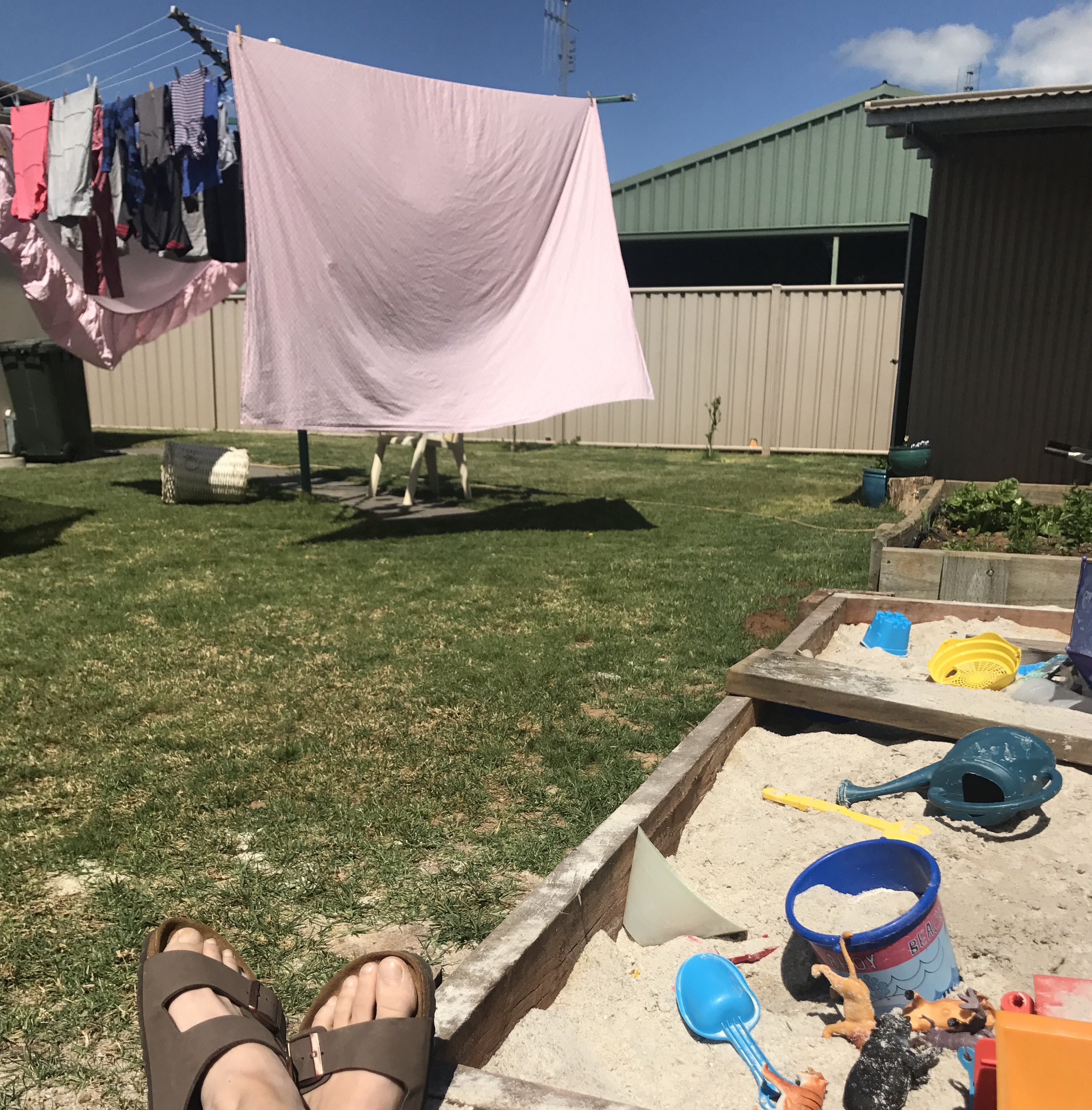
  Washing is hanging on line as a fine example of drudgery ha ha!

Helpers

In a world that can so often seem starved of compassion and basic humanity, it would be easy to have a bleak outlook on the future we are leaving for our children. With heartbreaking atrocities like the Manchester attack making headlines, we feel sickened with worry and fear. We think: what are we doing to each other?

In an effort to turn away from the horror that can be a daily broadcast in our lives, we seek out comfort and hope. We read quotes like that of Fred Rogers “When I was a boy and I would see scary things in the news, my mother would say to me, “Look for the helpers. You will always find people who are helping.” Such a quote is testament to the power of words in offering light during times of suffocating darkness.

When I have read that quote in the past it has conjured up images of emergency service men and women, heroic bystanders, foreign aide workers or volunteers helping to rebuild after destruction. My idea of a helper was limited to those responding in times of crisis, those ready to stand up tall and fight back against evil. And of course those helpers are incredibly important, they are saviours really.

My idea of helpers though has changed, because helpers are much more than that. Helpers are not just the people on the news, nor are they just those who help in times of greatest need, rather they are the everyday people doing great things right under our noses, in the communities that we live in.

They are the volunteers that bring companionship to the residents within aged care facilities. The ones who greet the sometimes forgotten great-aunts of the world with a smile and a story.

They are the people who donate their time to helping those less fortunate, organising food and shelter and basic human rights to some of our most vulnerable people.

They are the ones organising community events for no other reason than to support their fellow townsfolk.

They are the employers who nurture their staff and the employees who go above and beyond.

They are the extended family members and friends who know it takes a village to raise a child, they want to be your village.

They are the angels who leave a meal on your doorstep or bench when they know you are going through a difficult time.

They are the patient people who let you go in front of them in the line, or offer a smile when you’re child is being a little unlikeable, or don’t toot you because you missed the green arrow. The people who remind you that the one percenters don’t matter.

They are the people who donate blood, door knock for charitites and dress up as Santa just to see the looks on kids faces.

They are the team mates who will graciously sit their time on the sidelines while you get more time on the court or field. Sometimes you forget, but you couldn’t be there without them.

They are the coaches and committee members of sporting and recreational clubs that do a power of work so that you can enjoy something you love. People with their own families and jobs, carrying their own baggage, who put it all aside to help run their club. People who when the chips are down, will be criticised openly by some, discreetly by others.

Our communities are only as good as the helpers within them. They are the role-models who inspire me to be a better person, and thankfully, they are everywhere.

If you look for the helpers you will see them.

If you are a helper, thank you. You make the world feel beautiful again.

Eliza xx


 Photo: Holding Hands, Heroism Wiki, Fandom powered by Wikia.